


Every industrial facility runs on wiping cloths. Whether you are wiping down a CNC machine, cleaning up cutting fluid, detailing a vehicle, or maintaining a production line, the right wiper is the difference between a fast, clean job and a smeared surface, a contaminated part, or a frustrated worker reaching for a second cloth.
The Canadian industrial market offers dozens of wiper types, weights, and formats, and the terminology is inconsistent enough that procurement teams frequently overbuy, underbuy, or buy the wrong thing entirely. This guide cuts through the confusion. By the end, you will know how to match wiper type to task, which format delivers the best cost-per-use in your application, and how to order bulk wiping cloths Canada-wide for any facility type.
Why the Right Wiper Matters More Than You Think
Wiping cloths are a consumable that most facilities treat as an afterthought — ordered in bulk, stored haphazardly, and used interchangeably regardless of task. This approach is more expensive than it looks.
Cross-contamination risk. Using the same wiper on a machined surface and then on a bearing housing can transfer debris or chemicals between components. In food processing and pharmaceutical environments, cross-contamination from the wrong wiper type can trigger a quality or compliance failure.
Surface damage. Abrasive wipers on sensitive surfaces — painted panels, optical components, polished metal — cause micro-scratches that accumulate over time. Using a non-woven shop wipe on a coated automotive surface is a common and avoidable mistake.
Lint and particle contamination. Low-quality cotton rags and low-grade cellulose wipers shed fibres. In clean rooms, spray booths, and precision machining environments, wiper lint is a serious quality defect.
Cost per use versus unit price. A cheap wiper that falls apart after one use, sheds lint, or requires two cloths to do the job of one is not actually cheaper. Understanding sorbency, durability, and task fit is essential to getting real value from your wiper budget.
The Main Types of Industrial Wiping Cloths
DRC (Double Re-Creped) Paper Wipers
DRC wipers are the workhorse of Canadian industrial facilities. Made from a two-ply creped cellulose construction, DRC wipers are soft enough to avoid scratching most industrial surfaces, absorbent enough for oils, coolants, and cleaning solvents, and durable enough for most shop tasks without disintegrating mid-wipe.
Key characteristics:
– Good absorbency for water-based and light oil-based fluids
– Low-lint compared to standard paper towels
– Perforated roll or flat sheet formats
– Typically white or blue; blue is often used in food-service environments for colour-coded cleaning protocols
Best applications: General maintenance wipe-downs, machine cleaning between jobs, surface preparation before painting, food-service counter and equipment cleaning.
Limitations: DRC wipers are not suitable for aggressive solvents or heavy oil loads. They are a single-use product and generate significant waste volume in high-throughput operations.
Wi-Supply stocks DRC wipers in bulk for Canadian facilities, available in standard and heavy-duty weights.
Cotton Shop Rags and Wiping Cloths
Cotton rags are the original industrial wiper — reusable, highly absorbent, and effective for heavy-duty applications that would destroy a paper or nonwoven wiper. Canadian industrial operations have used cotton rags for generations, and for good reason.
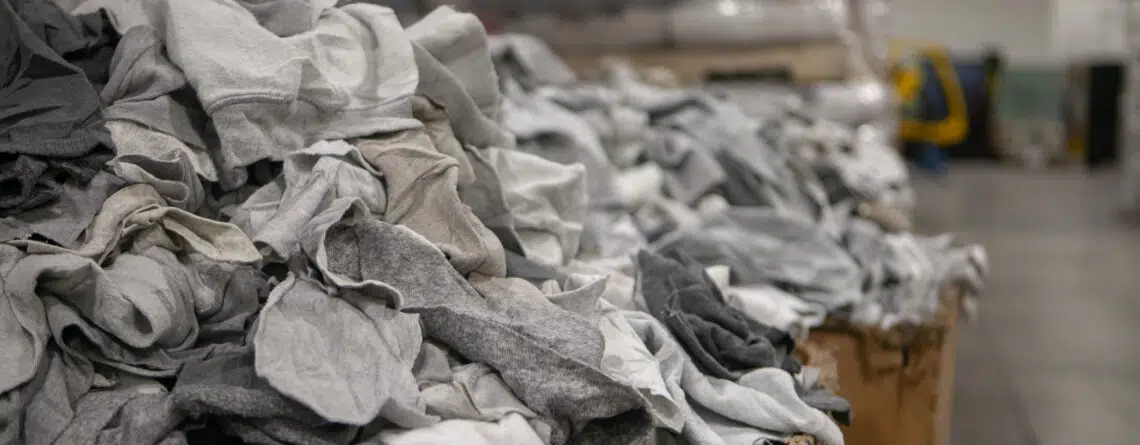
Recycled cotton rags are sorted from reclaimed textile waste — T-shirts, sweatshirts, knit fabrics — and sold in grades based on colour, fibre content, and contamination level. They are the most cost-effective wiper for high-fluid-load tasks.
New cotton wipers (also called shop towels or bar mop towels) are manufactured from new fibre, offering consistent weight, better lint control, and a cleaner surface than recycled rags.
Key characteristics:
– High absorbency — cotton holds significantly more fluid per gram than cellulose or polypropylene
– Durable and reusable when laundered
– Variable quality between grades and lots (for recycled rags)
– Higher upfront cost than disposables, lower cost-per-use when laundered
Best applications: Heavy fluid cleanup, engine and drivetrain maintenance, shop floor mopping, weld spatter cleanup, industrial painting prep.
Limitations: Recycled rags can introduce contamination risk from previous uses or residual dyes. Laundering programs require management overhead. Not appropriate for clean environments or where colour-coding is required.
Nonwoven Wipers
Nonwoven wipers are engineered from bonded fibres — typically polypropylene, polyester, or a blend — that are either hydroentangled, airlaid, or meltblown into a sheet. They occupy the space between paper wipers and cloth rags, offering better durability than cellulose with more consistency than recycled cotton.
Hydroentangled nonwovens are the most common type in industrial use. Water jets entangle the fibres, creating a strong, lint-free cloth that can handle aggressive use without falling apart.
Airlaid nonwovens are softer and more absorbent but less durable — better suited for cleaning surfaces where lint is a concern but mechanical strength is not critical.
Key characteristics:
– Low-lint to lint-free depending on construction
– Consistent weight and dimensions (unlike recycled rags)
– Compatible with most solvents and cleaning chemicals:
– Available in single-use and multi-use formats
Best applications: Precision cleaning, electronics assembly, automotive detailing, spray booth prep, pharmaceutical and food-processing environments where lint and contamination are critical concerns.
Microfiber Wipers
Microfiber is a synthetic fabric made from ultra-fine polyester and polyamide fibres, typically split to create a wedge-shaped filament that is far smaller in diameter than a human hair. This construction gives microfiber its characteristic cleaning ability: the filaments mechanically lift and trap particles, bacteria, and oils rather than simply pushing them across a surface.
Key characteristics:
– Exceptional cleaning performance on smooth, sensitive surfaces
– Can clean without chemicals — effective with water only for many applications
– Highly durable when laundered correctly (400+ wash cycles for quality microfiber)
– More expensive per unit than cotton rags or nonwovens
Best applications: Automotive detailing, optical and electronic component cleaning, food-service surface cleaning (particularly under HACCP protocols), hospitality housekeeping, stainless steel and glass surfaces in manufacturing.
Limitations: Microfiber is not appropriate for high-fluid-load industrial cleanup. It attracts abrasive particles that can scratch sensitive surfaces if not managed correctly. Quality varies enormously — cheap microfiber performs poorly and deteriorates quickly.
Compressed Bags of Rags
Compressed rag bags are a volume-efficient packaging format where wiping cloths — typically recycled cotton or nonwoven shop rags are vacuum-compressed into a dense block that expands to 3–5x its packed size when opened. For facilities with high consumption and limited storage space, compressed bags offer a significant logistics advantage: more product per pallet position, simpler receiving, and easier storage between orders.
Wiper Grades Explained
Grade A, B, and C Cotton Rags
The grading system for recycled cotton rags is standardized across the North American market:
Grade A: Light-coloured or white cotton only, minimal contamination, higher consistency. Best for tasks where colour contamination or fibre variation is a concern. Typically the most expensive recycled rag grade.
Grade B: Mixed colour cotton, may include some synthetic blends, light contamination acceptable. The standard general-purpose recycled rag for most industrial shops. Best cost-per-use for heavy maintenance tasks.
Grade C: Dark colours, heavier blends, accepts more variation and contamination. Lowest cost, appropriate for applications where absorbency matters more than cleanliness — soaking up oil spills, wiping down floors before mopping, initial cleanup in dirty environments.
For a deeper comparison, see our article on Grade A vs. Grade B vs. Grade C shop towels.
Choosing the Right Format: Roll, Flat Sheet, or Cut Rags
Rolls allow workers to tear off exactly the length needed, reducing waste and providing flexibility in task coverage. Ideal for roll dispensers mounted at workstations or production lines.
Flat sheets (folded or stacked) are faster to grab in emergency cleanup situations and are the standard format for pop-up dispensers and spill kit configurations.
Cut rags are pre-cut to consistent dimensions — typically 14 x 14 inches or 18 x 18 inches — and sold in bulk bags. Consistent sizing makes inventory management easier and reduces the variation in usage across a facility.
Cost-Per-Use: How to Calculate What You’re Actually Spending
The unit price of a wiper is almost always misleading. What matters is cost per task completed.
To calculate cost-per-use:
- Count how many wipers are used per task in your environment (e.g., 3 DRC sheets per machine wipe-down).
- Calculate the unit cost from your bulk price (e.g., $28 per case of 800 = $0.035 per sheet).
- Multiply: 3 sheets × $0.035 = $0.105 per task.
Compare this against alternative wiper types for the same task. A more expensive microfiber cloth used once per task at $0.80 per cloth may outperform a DRC wiper used 4 times per task at $0.14 total — depending on how well it cleans and how long it lasts.
For facilities purchasing bulk wiping cloths Canada-wide, volume pricing and consistent restocking schedules are the most effective levers for controlling wiper costs.
Wiper Selection by Industry
Automotive and Vehicle Maintenance
Heavy-fluid applications — oil changes, brake work, transmission fluid — require high absorbency and durability. Grade B recycled cotton rags or heavy-duty DRC wipers are the standard. Microfiber is appropriate for detail work and interior cleaning but not for underhood fluid cleanup.
Manufacturing and Machining
CNC machining and metal fabrication generate coolant, cutting fluid, and metal particulate. Hydroentangled nonwoven wipers are preferred for their low-lint construction and compatibility with solvent-based cleaning agents. DRC wipers are appropriate for general wipe-down. Avoid cotton rags near precision surfaces where fibre contamination is a concern.
Food Processing and Commercial Kitchens
Colour-coded wiping programs — typically blue for food-contact surfaces, red for non-food areas — are standard under HACCP and provincial food safety regulations. Blue DRC wipers and colour-coded microfiber cloths are the most common choices. All wipers used in food-contact zones must be laundered or disposed of according to applicable food safety protocols.
Automotive Refinishing and Spray Booths
Spray booth environments require lint-free wipers for tack-off and surface prep. Low-lint nonwovens or tack cloths are standard. Never use recycled cotton rags in a spray booth — fibre contamination in a finish coat is a costly defect.
General Maintenance and Janitorial
High-volume facilities benefit from DRC roll dispensers at key maintenance stations and bulk cut rags for floor-level cleanup. For washroom and surface cleaning, blue DRC or microfiber cloths are standard.
How to Order Bulk Wiping Cloths in Canada
Step 1: Define Your Applications
List the top three to five wiper tasks in your facility. For each, identify whether contamination control, absorbency, surface sensitivity, or cost is the primary driver.
Step 2: Choose Wiper Types by Task
Match each task to the appropriate wiper type using the guide above. Avoid one-size-fits-all purchasing unless your operation genuinely has only one wiper application.
Step 3: Calculate Annual Volume
Estimate weekly consumption per wiper type and multiply by 52. Add a 20% buffer for seasonal variation and unexpected demand spikes.
Step 4: Set Up a Restocking Schedule
Irregular purchasing creates waste — both from rush orders at premium pricing and from over-ordering when consumption slows. A monthly or quarterly restocking schedule, aligned with your actual consumption data, is the most cost-effective approach for high-volume facilities.
Step 5: Consolidate with a Single Supplier
Purchasing all wiper types from a single Canadian industrial supplier reduces administrative overhead, simplifies receiving, and typically unlocks better volume pricing than split purchasing across multiple vendors.
Buy Bulk Wiping Cloths in Canada — Wi-Supply
Wi-Supply stocks a comprehensive range of industrial wiping cloths for Canadian facilities, available for bulk ordering with shipping across Canada.
DRC Wipers and Paper Wipers — Standard and heavy-duty DRC in roll and flat-sheet formats. Blue and white options for colour-coded programs.
Recycled Cotton Rags — Grade A, B, and C recycled cotton rags in bulk bags and compressed formats. Consistent quality, Canadian market pricing.
Nonwoven Shop Wipers — Hydroentangled nonwovens for low-lint industrial applications. Compatible with most industrial cleaning agents.
Microfiber Cloths — Professional-grade microfiber for detailing, food service, and precision cleaning applications.
Browse the full range at wi-supply.com/product-category/wiping-cloths/ or contact the Wi-Supply team for bulk pricing, volume order support, and facility-wide restocking programs.
Related Articles
- Grade A vs. Grade B vs. Grade C Shop Towels: What’s the Difference? — A detailed breakdown of recycled rag grading, what each grade is suitable for, and how to choose by application.
- Microfiber vs. Nonwoven Wipers: Which Is Right for Your Industry? — How microfiber and nonwoven wipers compare on lint, absorbency, durability, and cost-per-use.
- Industrial Safety Gloves Canada: The Complete Buying Guide — Hand protection selection from disposable nitrile to cut-resistant gloves for Canadian industrial facilities.