


Facility managers responsible for commercial and industrial properties in Canada face a unique janitorial supply challenge: they need products that perform in demanding environments — often with WHMIS-regulated cleaning chemicals, high-traffic floors, and healthcare-adjacent or food-adjacent spaces — while managing procurement costs across a wide product portfolio. The right janitorial supply strategy for a Canadian facility manager isn’t just about finding the lowest price on cleaning cloths — it’s about building a reliable supply system that keeps the facility running without frequent stockouts, specification changes, or supplier surprises. This guide covers the core janitorial supply categories and how to build a procurement approach that works.
Core Janitorial Supply Categories for Canadian Facilities
Wiping and Cleaning Cloths
The highest-volume consumable in most commercial cleaning programs. The choice of wiping material significantly affects both cost and cleaning performance:
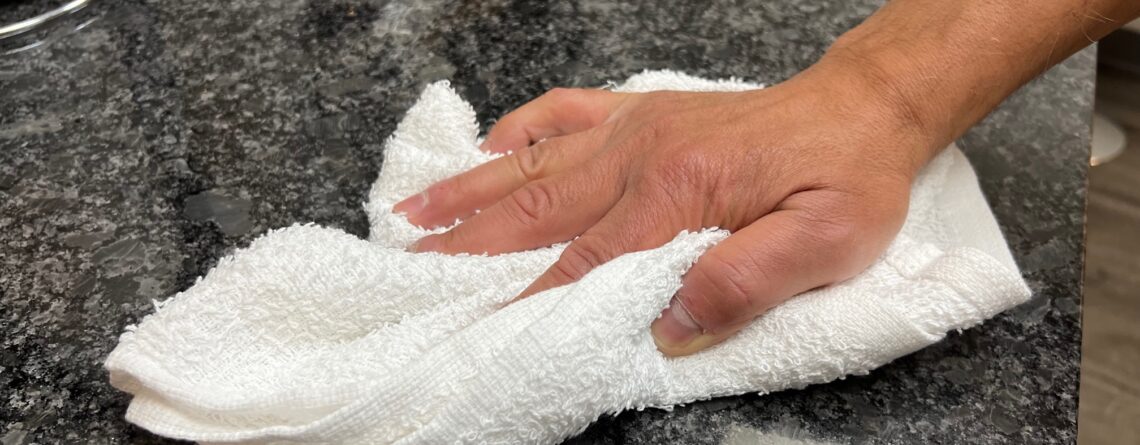
- Bar mop towels: Heavy-duty terry cotton towels that hold far more liquid than paper towels — the standard for commercial kitchen and food service cleaning. Laundered and reused, they cost a fraction of disposable equivalents at scale.
- Huck towels: Flat-woven cotton with a waffle pattern that provides excellent scrubbing action without scratching — ideal for stainless steel, glass, and smooth surface cleaning in commercial kitchens, healthcare, and hospitality settings.
- Reclaimed cotton rags: The economical choice for general janitorial — floor cleanup, equipment wipe-downs, and general soiling. Available in white (lower lint) and coloured grades.
- Microfiber cloths: High-dexterity cleaning for surfaces where streak-free results matter: mirrors, glass partitions, stainless steel, and hospital-grade surface cleaning. Microfiber picks up particulates and bacteria mechanically without chemical assistance — a consideration for facilities reducing chemical use.
Mops and Floor Care
- Cotton mop heads: The traditional commercial floor mop — highly absorbent, suitable for most commercial floor types. Available in multiple yarn weights for different floor sizes and soil loads.
- Microfiber mop heads: Better particulate capture than cotton, faster drying, and compatible with colour-coded infection control programs in healthcare settings.
- Mop handles and hardware: Standard and telescoping handles, side-press and down-press wringers, and rolling mop buckets for commercial use
Protective Disposables
- Disposable gloves: Nitrile disposables are the Canadian standard for commercial cleaning staff — chemical-resistant, latex-free, and available in bulk at significantly lower cost than retail. Cleaning staff who change gloves frequently need bulk supply.
- Drop cloths: Canvas and poly-cotton drop cloths for floor and furniture protection during painting, maintenance, and renovation work in occupied facilities
- Disposable coveralls: For painting, remediation, and other tasks where clothing contamination is a risk
Waste Management Supplies
- Garbage bags sized to facility waste containers — liner sizing matters for containment and cost
- Recycling bags and clearly labelled containers for facilities with diversion programs (required under many Canadian municipal bylaws)
- Sharps containers and biohazard waste supplies for healthcare-adjacent facilities
Spill Containment
Janitorial operations are frequently the first responders to facility spills — coolant, cleaning solution, or process liquid releases. Staging spill kits at janitorial storage rooms ensures staff have the right tools for rapid containment before a small spill becomes a slip hazard or a regulatory event. Universal spill kits with sorbent pads and socks handle the majority of non-hazardous spill events in commercial facilities.
Building a Reliable Janitorial Supply System
Standardize Specifications
Ad hoc purchasing — whoever places the order buys whatever’s available — produces inconsistent cleaning results and makes cost tracking impossible. Standardize on one bar mop spec, one mop head weight, one glove type. Document the standard and enforce it through your purchasing system.
Set Par Levels by Location
High-traffic facilities with multiple janitorial closets need supply staged at the point of use, not just in a central storage room. Set minimum stock levels for each closet and trigger automatic restocking when levels drop. Running out of gloves or cleaning cloths on a night shift shouldn’t require a special order.
Consolidate to a Single Supplier Where Possible
Managing five suppliers for janitorial categories that overlap (a glove supplier, a mop supplier, a rag supplier) creates unnecessary administrative overhead. A single supplier covering wiping cloths, mops, disposable gloves, drop cloths, and spill supplies reduces purchase orders, invoices, and supplier qualification requirements.
Buy at Appropriate Volume
Commercial janitorial supply at retail pricing carries significant markup over wholesale. A facility consuming multiple cases of gloves per month and multiple bales of cleaning cloths per quarter should be buying at case and pallet pricing from a wholesale supplier — not ordering by the box from a retail distributor.
Wi-Supply for Canadian Facility Managers
Wi-Supply supplies bar mop towels, huck towels, cotton cleaning rags, disposable nitrile gloves, string knit gloves, drop cloths, spill kits, and sorbent products to Canadian commercial facilities. We supply from Canadian inventory with shipping across the country. Contact us for wholesale pricing on the janitorial supply categories your facility uses most.

