


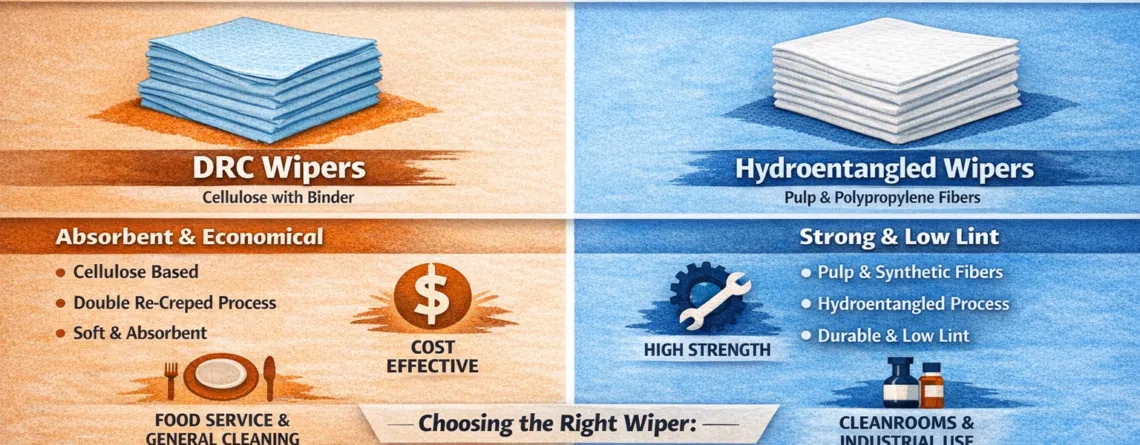
When comparing DRC (Double Re-Creped) wipers and hydroentangled wipers, the key differences lie in their composition, manufacturing process, and resulting properties:
DRC Wipers:
- Composition:
- Primarily cellulose based.
- Include a binder infused into the cellulose.
- Manufacturing:
- “Double re-creped” refers to the process that enhances absorbency and creates a cloth-like feel.
- Properties:
- Excellent absorbency, especially for water-based liquids.
- Relatively soft.
- Generally, more economical.
- Primarily designed for wet applications.
- less strength than hydro entangled wipers.
- Common Use:
- General-purpose cleaning, especially where high absorbency is needed.
- food service.
Hydroentangled Wipers:
- Composition:
- A blend of pulp and polypropylene fibers.
- Made without binders.
- Manufacturing:
- Hydroentangling uses high-pressure water jets to entangle the fibers, creating a strong, durable fabric.
- Properties:
- High strength and durability, suitable for both wet and dry applications.
- Low linting, making them ideal for sensitive applications.
- Resistant to solvents.
- more costly than DRC wipers.
- Common Use:
- Industrial cleaning, especially where strength, low lint, and solvent resistance are required.
- clean rooms, and electronic manufacturing.
In summary:
- DRC wipers prioritize absorbency and cost-effectiveness, while hydroentangled wipers emphasize strength, durability, and low lint.
- Therefore, the correct wiper to use will depend heavily on the application requirements.