


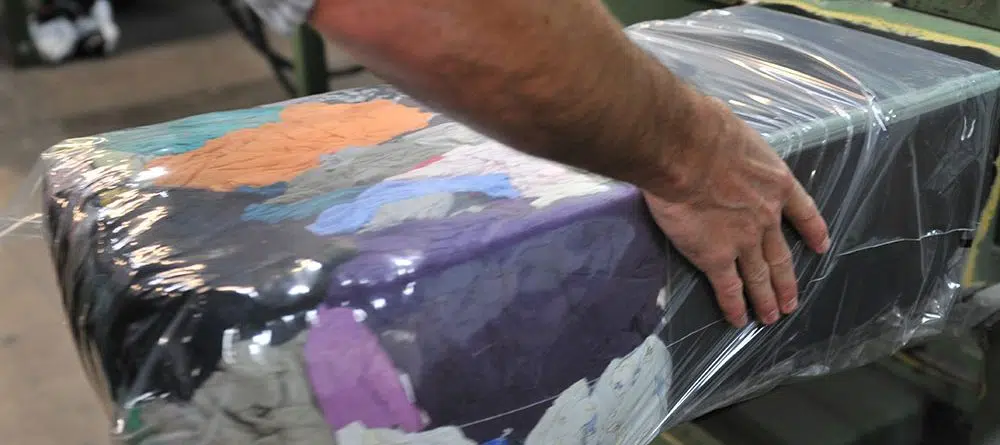
One of the most common questions from US purchasing managers is whether to buy recycled cotton rags or new cotton wipers. The answer isn’t straightforward — it depends on your application, your quality requirements, and your budget. This guide breaks down the key differences so you can make the right call for your facility.
What Are Recycled Cotton Rags?
Recycled cotton rags are made from post-consumer and post-industrial cotton garments — think old T-shirts, sweatshirts, jeans, and denim. After collection, these garments are sorted by color and fabric type, then cut or torn into usable rag pieces. The result is a highly absorbent, cost-effective wiping product that redirects textile waste from landfills.
In the US market, recycled cotton rags are the dominant choice for general industrial wiping. They’re sold by weight (typically in 25 lb or 50 lb cases) and come in colored (mixed fabric colors) or white (predominantly white T-shirt material) grades.
What Are New Cotton Wipers?
New cotton wipers are manufactured from virgin cotton specifically for industrial use. They’re cut to consistent sizes, have uniform fabric weight, and undergo quality control to ensure low lint and minimal contamination. Common types include terry cloth wipers, flannel wipes, and knit wipers made to specific GSM (grams per square meter) specifications.
Performance Comparison
Absorbency
New cotton wipers often have a slight edge in absorbency consistency since they’re made to a specific specification. However, high-quality recycled cotton rags — particularly white T-shirt knit — perform comparably for most industrial applications including oil, solvent, and coolant wiping.
Lint Generation
New wipers typically produce less lint because they’re pre-washed and manufactured to minimize fiber shedding. Recycled rags can vary — white cotton knit rags tend to be low-lint, while terry or fleece-based recycled rags may shed more. If lint contamination is a concern (paint applications, precision machining), white new cotton wipers or pre-washed recycled white knit are your best options.
Consistency
New wipers win on consistency. Every wiper is the same size, weight, and fabric type. Recycled rags come in variable sizes and fabric blends — which is fine for general industrial work, but less ideal for processes requiring standardized materials.
Cost Comparison for US Buyers
Cost is typically the deciding factor:
- Recycled cotton rags: $0.40–$0.80/lb (50 lb case ~$25–$40)
- New cotton wipers: $2.00–$5.00/lb depending on type and grade
For a facility using 200 lbs of rags per month, switching from new wipers to recycled cotton rags could save $250–$800 per month — or $3,000–$9,600 per year — with no meaningful performance difference for most tasks.
Environmental Considerations
Recycled cotton rags have a clear environmental advantage. They divert textile waste from US landfills, require no additional cotton cultivation, and reduce manufacturing energy compared to producing new wipers. For US businesses pursuing sustainability goals or reporting under ESG frameworks, sourcing recycled cotton rags is a measurable contribution to waste reduction.
Which Should You Choose?
Use this quick guide:
- Choose recycled rags if: Your application is general industrial wiping (grease, oil, coolant, surface cleanup), you’re cost-sensitive, and lint isn’t a critical concern.
- Choose new cotton wipers if: You need consistent sizing, low lint is essential (painting, optics, precision assembly), or your quality system requires traceable materials.
- Best of both worlds: Many US facilities use recycled colored rags for general cleanup and white recycled knit or new wipers for precision tasks.
American Textile Mills stocks both recycled cotton rags and new cotton wipers across the United States. Contact our US sales team to discuss your facility’s specific requirements and get volume pricing.